How to Get More Towing Calls in Elizabethtown: The 30-Day System That Works (2026)
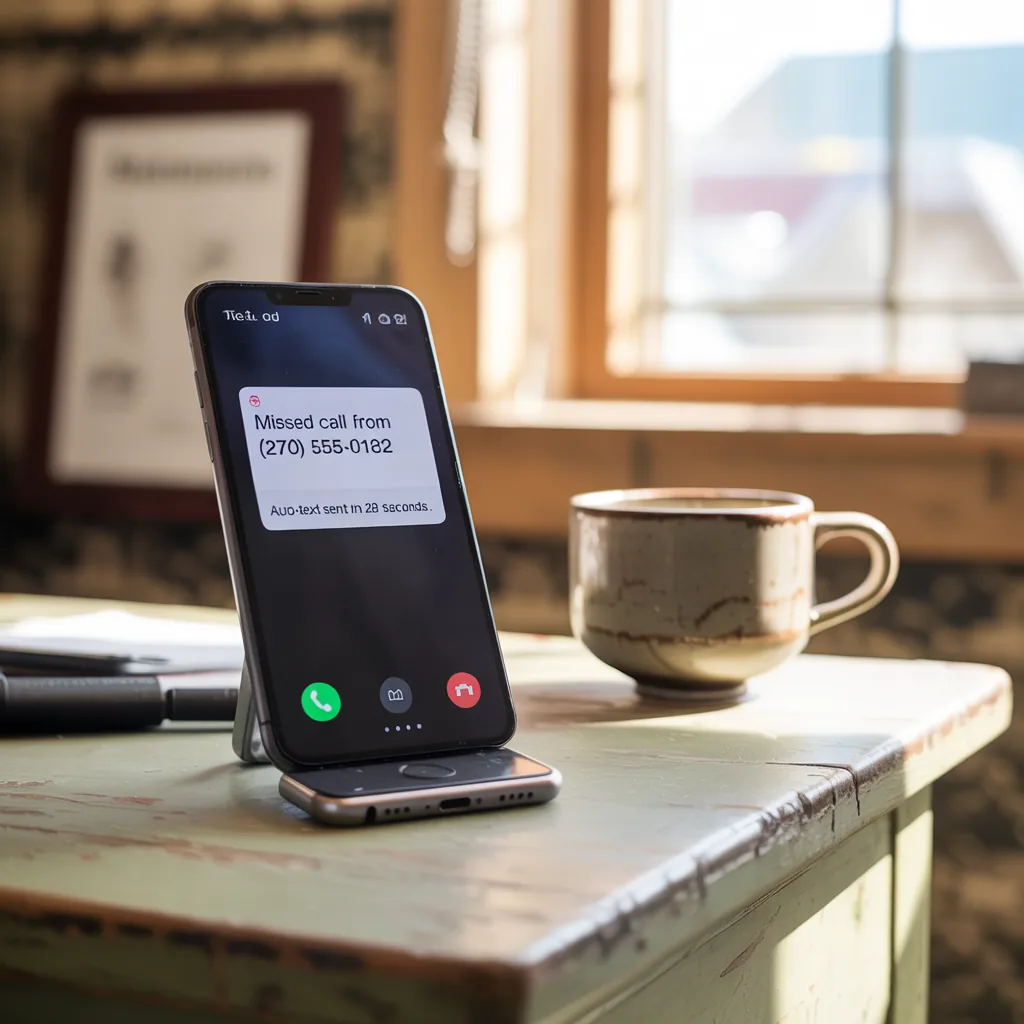
Get more towing calls in Elizabethtown with a 30-day system: optimize Google Business Profile for 24/7 emergency service, install [missed-call text-back](/services/missed-call-text-back), build to 4+ new reviews per month, and run after-hours dispatch via an answering service. Horizon Business Hub Contractor Core operates the full system for Hardin County towing companies at $1,997 setup + $497/month.
What does the 30-day system actually look like for a Hardin County towing company?
Four pieces, in order of fastest impact.
| Week | Focus | Expected Impact |
|---|---|---|
| 1 | GBP optimization + missed-call text-back | +15-25% call recovery from voicemail drops |
| 2 | Review request automation | First 8-12 new reviews land days 14-28 |
| 3 | After-hours dispatch (answering service or auto-text) | +30-40% capture of nights and weekends |
| 4 | Tracking + reporting | Full visibility into call source, conversion rate, average ticket |
The 30-day system is the same playbook we run with NM Towing and other Hardin County operators. Specific numbers vary by competitive density and existing infrastructure, but the order of operations stays constant.
Why does Hardin County towing search reward this specific system?
Three reasons unique to towing.
- The customer is in distress. Broken down on Bluegrass Parkway, locked out of a car in a Radcliff parking lot, hit a curb on the way home. They pick the first 5-star result and call. No comparison shopping.
- Proximity dominates the ranking signal. Google heavily weights physical proximity for "tow truck near me" searches. A towing company at 207 Towne Dr Elizabethtown ranks above one 15 miles out for searches within Elizabethtown.
- 40-60% of calls happen outside business hours. Towing is 24/7. Operators without after-hours dispatch lose more than half the addressable market.
How do I execute the 30-day system step-by-step?
Step 1: Optimize Google Business Profile for 24/7 emergency service
Set hours to "Open 24 hours" if you operate 24/7. Add "Emergency service" attribute. Primary category: "Towing Service." Secondary: "Roadside Assistance" if applicable. Add 20+ photos: trucks, drivers, equipment, accident-recovery jobs. Service descriptions for each: light-duty tow, accident recovery, motorcycle tow, long-distance, lockout, jump-start, tire change.
Step 2: Install missed-call text-back
Every missed call triggers an auto-text within 30 seconds: "Sorry we missed you, what's your location and the issue? We'll dispatch ASAP." Industry data shows 27% of missed calls respond to the text-back and book. Automated lead follow-up guide.
Step 3: Build review velocity
Every completed tow triggers an SMS 4 hours after job close (towing-specific timing, earlier than other trades because the customer's emotional peak is at recovery): "Glad we got you back on the road. 30 seconds to leave a Google review? [link]". Target 4+ new reviews per month from a base of 30+ monthly tows.
Step 4: Run after-hours dispatch
Two options. Option A: live answering service ($200-$500 per month) that screens calls and dispatches to your on-call driver. Option B: automated dispatch via CRM that texts the on-call driver immediately when a call comes in after hours, with the customer's location and issue. Most Hardin County towing operators end up with a hybrid.
Step 5: Set up tracking
Every call should be tagged in the CRM with source (Google, Yelp, referral, repeat), outcome (tow completed, declined, no answer), and ticket size. Weekly review tells you which source is producing.
What does the towing industry data say about call volume and conversion?
Towing-specific operational benchmarks are documented across multiple industry sources. Knowing the numbers helps Hardin County operators set realistic goals.
Towing and Recovery Association data. The Tow Times industry reference tracks operational benchmarks across US towing companies. The 25th-percentile operator runs at 60% utilization (trucks active 60% of available hours); the 75th-percentile operator runs at 85% utilization. The difference between the two percentiles is roughly $120,000-$200,000 in annual revenue per truck.
BLS Bureau of Labor Statistics. Per BLS occupational data for tow truck operators, average hourly wages for tow operators in Kentucky run $14-$21. Crew utilization economics drive whether a 2-truck operation can grow to 4-truck without crew burnout.
Federal Motor Carrier Safety Administration data. Towing companies operating commercial vehicles must register with the Federal Motor Carrier Safety Administration if they cross state lines or tow vehicles over certain weight thresholds. The FMCSA registration affects insurance pricing, bonding eligibility, and contract eligibility for AAA, insurance company contracts, and motor club affiliations.
For Hardin County towing companies specifically, three local relationships drive scalable call volume. AAA contracts produce 30-40% of calls for affiliated operators; AAA contracts require FMCSA-compliant operations plus specific equipment standards documented at AAA's emergency road service specs. Local PD impound contracts (typically through Elizabethtown PD, Radcliff PD, or Kentucky State Police Post 4) require sealed bid processes documented through the City of Elizabethtown procurement. Local body shop relationships produce steady recovery work, most Hardin County shops have preferred-tower lists.
The AAA Approved Auto Repair network includes a tow-affiliate program worth knowing about for operators ready to scale beyond direct-call inbound. Affiliated operators receive dispatch from AAA's national call center at standardized rates.
Five revenue sources Hardin County towing operators should track separately to understand which mix works:
- Direct-dial Google search (highest margin, requires GBP optimization)
- AAA dispatch (steady volume, standardized rates, requires affiliation)
- Police impound contracts (predictable monthly volume, requires sealed bid)
- Insurance company contracts (medium volume, requires FMCSA registration)
- Body shop referrals (recovery work, requires shop relationships)
Most stable operations balance 2-3 sources. A pure direct-dial operation is vulnerable to Google ranking shifts. A pure AAA operation is vulnerable to contract renegotiation. Multi-source revenue smooths month-to-month variance and produces faster scaling math.
Per the Tow Times operational research, Hardin County and surrounding Kentucky counties produce average call mix of 35% direct-dial, 25% AAA, 20% police impound, 15% body shop recovery, and 5% miscellaneous. The most stable operators we work with deliberately diversify toward this mix rather than concentrating on the easiest source. Operators stuck under 60 monthly tows typically have only one or two sources working. Operators above 100 monthly tows usually have all five sources contributing. The path from one to the other is sequential, establish one source fully before adding the next, since each source has its own onboarding learning curve and trying to launch three sources simultaneously usually delivers none of them well. Sequencing matters: get direct-dial Google flow stable first because it generates the highest-margin calls, then layer AAA for steady volume per AAA's roadside program documentation, then add police impound and body shop relationships once you have crew capacity to handle the additional dispatch load without sacrificing response time on the higher-margin direct-dial work.
What are the most common mistakes Hardin County towing operators make?
- Letting calls go to voicemail and not calling back fast. The voicemail call-back from a towing customer is almost always a "thanks anyway, already got someone." Auto-text is the only thing that catches them.
- Not running after-hours dispatch. Half the market is nights and weekends. Skipping it is the biggest single revenue gap.
- Not asking for reviews. Towing customers are some of the most willing to leave 5-star reviews because the value is concrete (you got them home). The yield on a structured ask is 30%+ vs 5% for no ask.
- Stuffing keywords in the GBP name. "ABC Towing 24/7 Emergency Tow Truck Elizabethtown" gets the profile suspended. Use the actual registered LLC name.
- Not tracking which jobs come from Google vs Yelp vs referrals. Without source attribution, you cannot optimize where to spend time. Tag every call.
- Hiring more drivers before fixing the call funnel. Adding capacity without fixing the inbound side gives you more idle trucks. Fix calls first, then add capacity.
When should I bring in outside help to grow my towing company?
Three signals.
You are doing under 60 tows per month and want to get to 100+. The 30-day system above produces +10-20 tows per month at this stage. Contractor Core at $1,997 + $497/month operates the full system: GBP, missed-call recovery, reviews, dispatch automation, weekly metric review.
You are doing 100+ tows per month and the gap is operational, not lead-gen (slow dispatch, drivers idle, billing chaotic). At that volume the bottleneck is back-office, not phone calls. Foundation at $8,997 + $997/month replaces the entire ops function.
You have multiple trucks and want to grow to a fleet of 5-10. Multi-truck operations need dispatch software, real-time tracking, and reporting that the basics do not cover. Hardin County's Mike Harmon-archetype towing operators bring us in at this stage.
What other questions do Hardin County towing operators ask about growth?
Five additional questions answered in the structured FAQ section above: speed of volume growth, ranking factors, after-hours impact, review importance, and ticket sizes.
About the author

Justin Fernandez owns Horizon Business Hub (digital infrastructure for SMBs), Horizon Pack and Ship (two-location retail shipping in Radcliff and Elizabethtown), and Horizon Print Shop. He architects the agency stack from inside an actively-running multi-unit operation, not from a consulting chair. The goal is simple: bring enterprise-grade support to everyday businesses. What owners actually need, not what sounds impressive in a deck.
Read full bio →